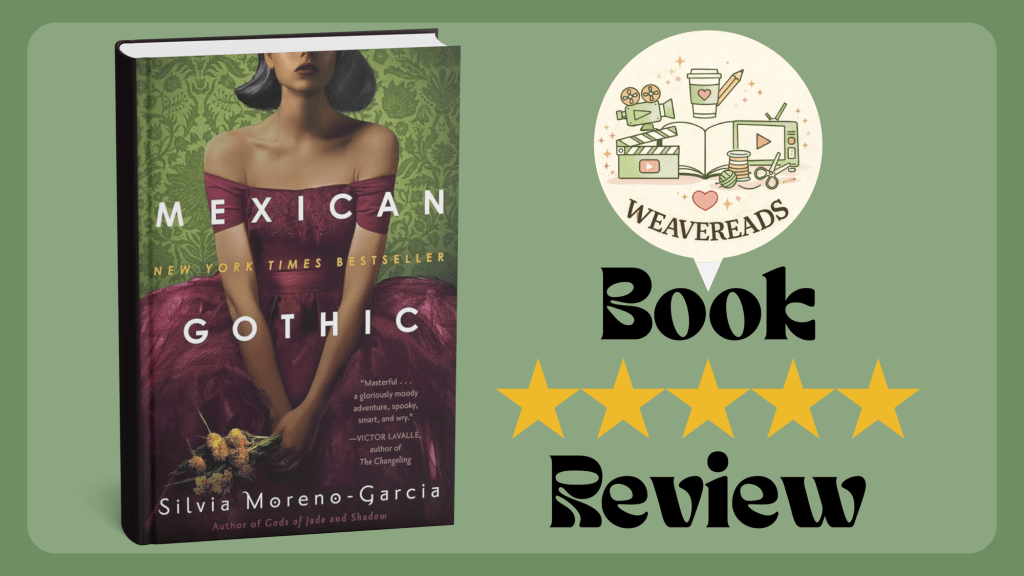
Not even ten pages in and I was already hooked. A frantic letter from Catalina about ghosts, voices in the walls, poison in the air? Say less. I was locked in immediately. The dread starts early, and it never really lets up.
But also: WHYYY would Noemí agree to go visit her obviously possessed cousin in an obviously haunted house??? I know it’s the 1950s and women were expected to obey their fathers and maintain appearances, but the second I heard about High Place I was like absolutely not. That manor is the definition of once-beautiful, now-rotting grandeur. Mold creeping up the walls, decay seeping into everything — you can practically smell it through the pages, and I was not happy to be forced among those walls. (But I was also excited, nervously anticipating every little thing that happened!)
And the DINNER RULE. No talking at the table?? I would have combusted. The silence, the tension, the scrutiny; I need to yap to survive awkwardness.
Noemí, though? Kind of a badass. She’s glamorous, sharp, and far more intelligent than the Doyles give her credit for. She pushes back without being reckless, and holds her ground while still playing the polite social game she’s forced into. I loved that about her. She didn’t make the typical kind of horror-movie decisions that make you want to scream at the page.
The Doyle family dynamics are deeply unsettling. I was a little confused at first about the history — especially once Ruth enters the picture and we learn about the earlier violence — but the confusion almost works in the story’s favor. It mirrors how disorienting High Place feels. Florence is cold and cruel, her son seems sweet and tragically trapped, and Howard Doyle? Absolutely vile. The man talking about “forging a new race” and “superior and inferior types” made my skin crawl.
And Virgil… Ugh. That’s what makes him scary. He’s convincing. Charming when he wants to be. There were moments where I almost felt bad for hating him; then I’d remember the manipulation, the control, the way he moves through rooms like he owns everyone in them. Every time Noemí left something out of her letters to her father — the sleepwalking, the rash, the escalating creepiness — I was internally screaming “THIS IS THE TIME TO WORRY!”
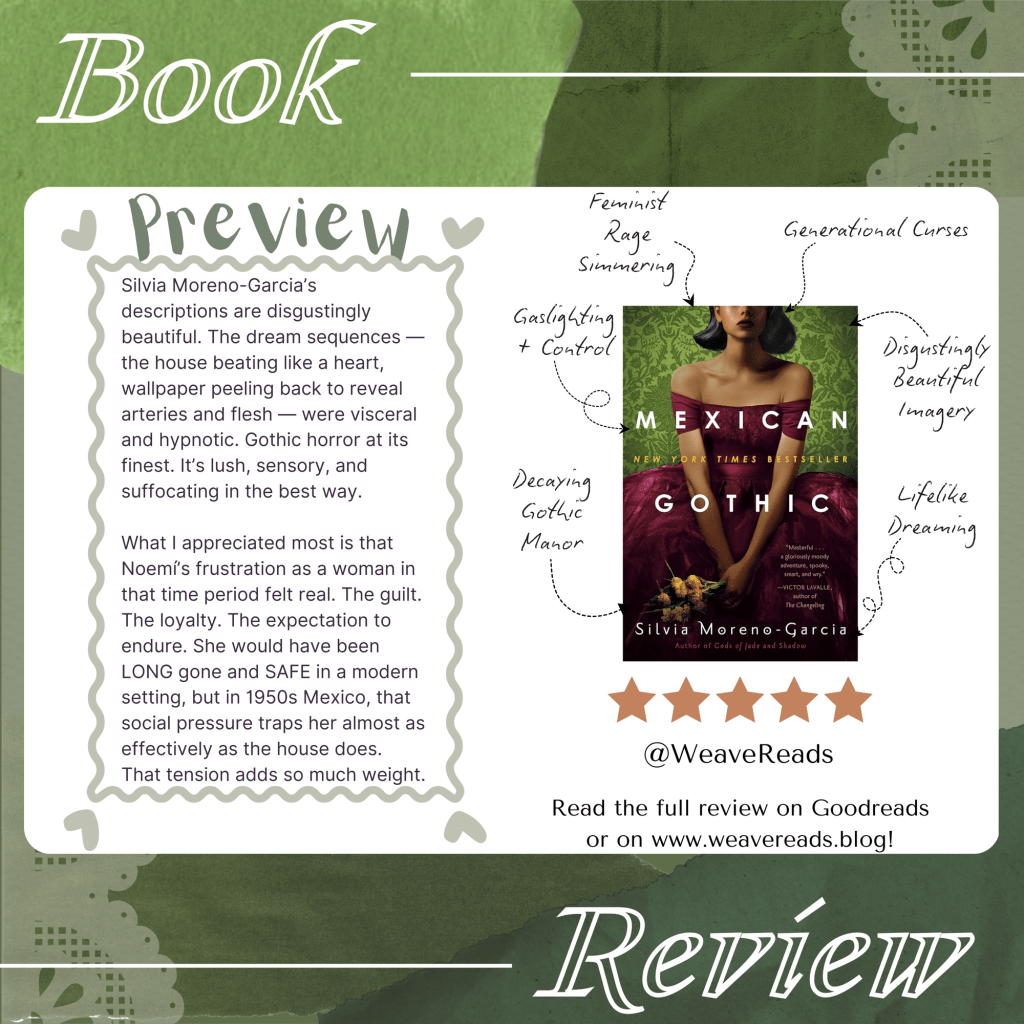
Silvia Moreno-Garcia’s descriptions are disgustingly beautiful. The dream sequences — the house beating like a heart, wallpaper peeling back to reveal arteries and flesh — were visceral and hypnotic. Gothic horror at its finest. It’s lush, sensory, and suffocating in the best way.
The deeper the story goes, the darker it gets: the curse, the incest, the generational rot, the way entitlement and colonial arrogance metastasize into something literally monstrous. It’s horrifying not just because it’s supernatural, but because it’s rooted in very real historical ideologies.
What I appreciated most is that Noemí’s frustration as a woman in that time period felt real. The guilt. The loyalty. The expectation to endure. She would have been LONG gone and SAFE in a modern setting, but in 1950s Mexico, that social pressure traps her almost as effectively as the house does. That tension adds so much weight.
And somehow, after all that decay and corruption, we get a satisfying ending. Earned. Hopeful. Cathartic. Thank God.
The premise felt fresh and unique, the atmosphere was thick and immersive, the characters were layered and believable, and the horror was both psychological and grotesque.
Five stars. I loved it.
 WeaveReads
Leave a comment