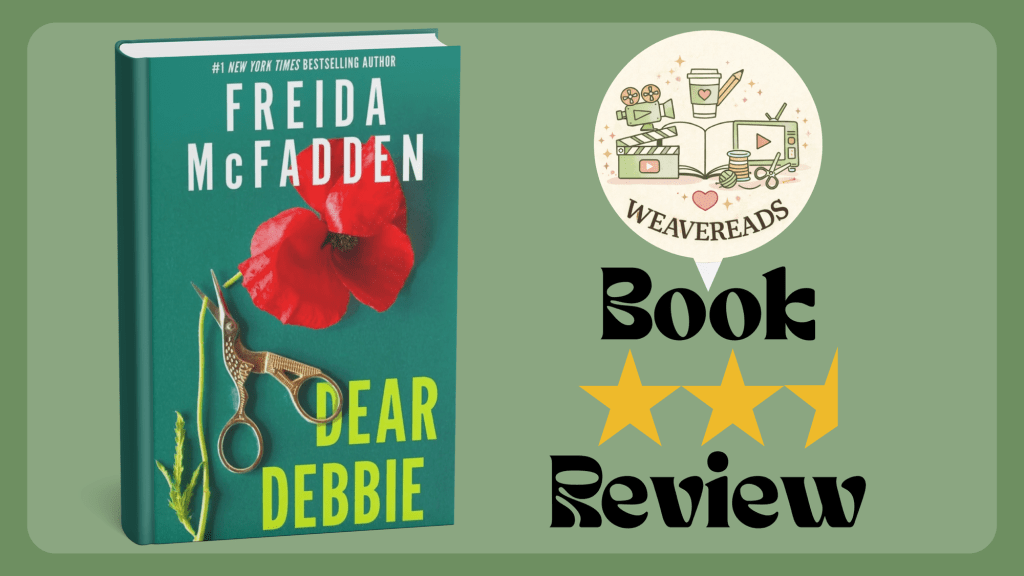
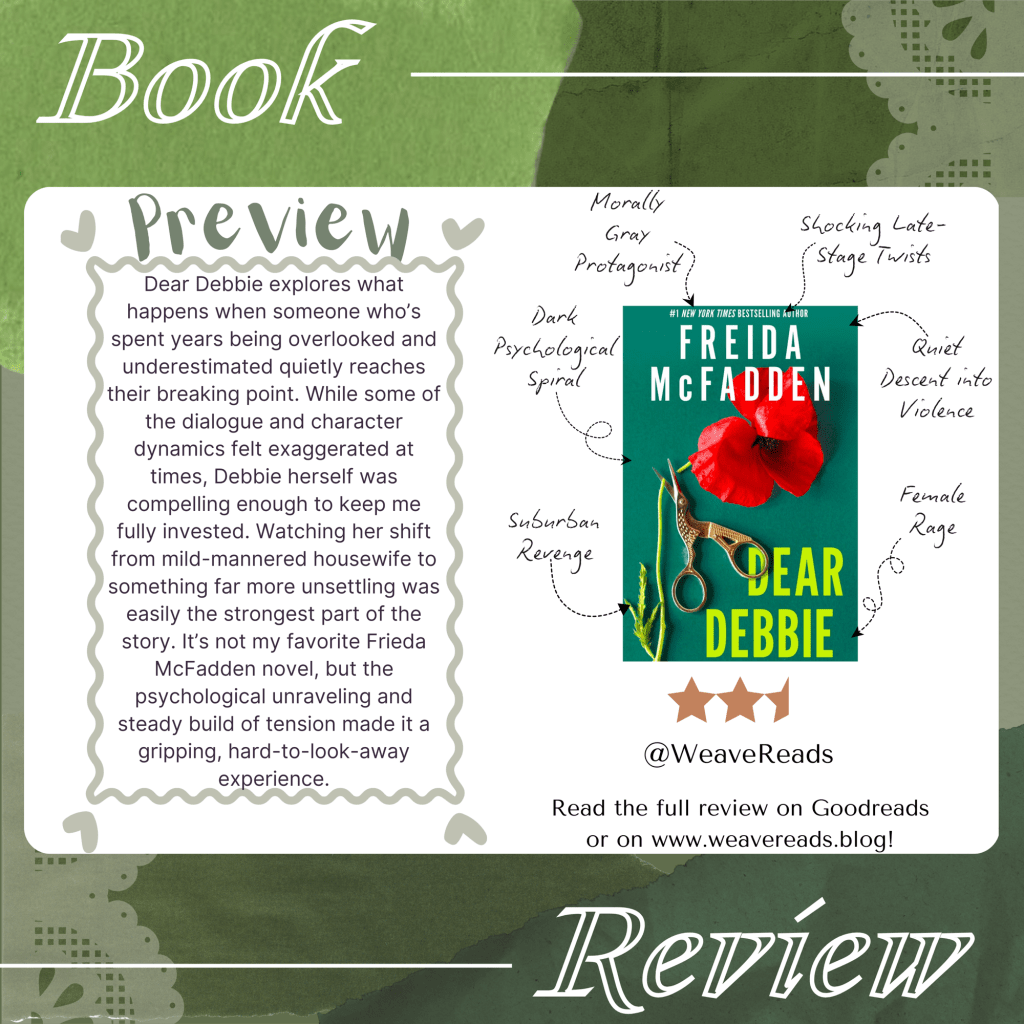
Frieda McFadden’s novels are always a mixed bag for me. Just using her author’s note as an example, I appreciate that she makes her books accessible and includes a full list of trigger warnings, but the tone she uses sometimes just doesn’t land for me personally. There’s a certain playful, almost overly sanitized way she frames things, like spelling out “S-E-X” as if to keep things feeling intentionally PG, and it pulls me out of the experience a bit. I get that it’s meant to be tongue-in-cheek, but it just doesn’t match the darker themes the story is actually exploring.
That disconnect kind of carries over into the characters too. Frieda’s characters always feel heightened, but here especially, everyone feels turned up to eleven. Lexi is teenagery in the most exaggerated, snark-at-every-turn way, and the dialogue between her and Debbie didn’t feel natural to me. There were multiple moments where people said things that no one would realistically say out loud, including one of those cringey “and then everybody clapped” type scenes that completely broke the immersion. Even some of the plot reveals — like the rumors about Debbie’s daughter’s coach — felt like information that realistically would have surfaced much earlier, especially if multiple girls were involved.
But where the book started to hook me was with Debbie herself.
The “Dear Debbie” drafts were easily one of the more interesting parts of the story. Watching her casually suggesting things like kidnapping and eardrum mutilation was unsettling in the best way, because it hinted at something darker beneath the surface of this mild-mannered suburban mom everyone underestimated. And that’s really the heart of the story: Debbie isn’t just snapping out of nowhere. She’s someone who is clearly intelligent, capable, and creative. She went to college and designed phone applications. She had ambition. But over time, she was flattened into a role that made her invisible. A housewife, a mother. Someone easy to dismiss.
And everyone did dismiss her.
Her husband, her friends, her children, the other housewives around her — they all viewed her through this narrow, outdated lens of what a “mild-mannered housewife” is supposed to be. There’s this constant undercurrent of misogyny in her world, where she’s talked down to, underestimated, and quietly devalued. It honestly made it hard not to root for her, even as she started doing objectively awful things. When she poisoned the book club food right after inviting someone new — not as a victim, but as a potential witness — I was both shocked and impressed. It was ruthless, calculated, and so far removed from the Debbie everyone thought they knew.
As the story progresses, you can feel the shift. People start noticing that something is off, but even then, they don’t really see her. They just sense that she’s no longer neatly fitting into the box they put her in.
The twists toward the end genuinely surprised me, which I’ll always give Frieda credit for. She knows how to construct a reveal in a way that reframes everything that came before it. Some parts stretched believability — especially the extent to which Debbie’s tech skills conveniently erased all evidence — but it didn’t ruin the experience. It was more one of those “okay, that’s a bit convenient” moments, rather than something that completely broke the story.
And that line — “Don’t worry, this will be over in a minute” — being echoed later in a completely different context was easily one of the most satisfying moments in the book. It transformed something disgusting and powerless into something controlled and final. That reversal was done really well.
Overall, “Dear Debbie” kept me engaged the entire time, even when the dialogue felt forced or the characters felt exaggerated. Debbie’s transformation was compelling enough to carry the story. It’s not my favorite Frieda McFadden book, and there were definitely moments where I struggled with the realism and tone, but the twists were effective, and Debbie herself was fascinating to watch unravel.
2.5 stars, rounded up to 3.
 WeaveReads
Leave a comment