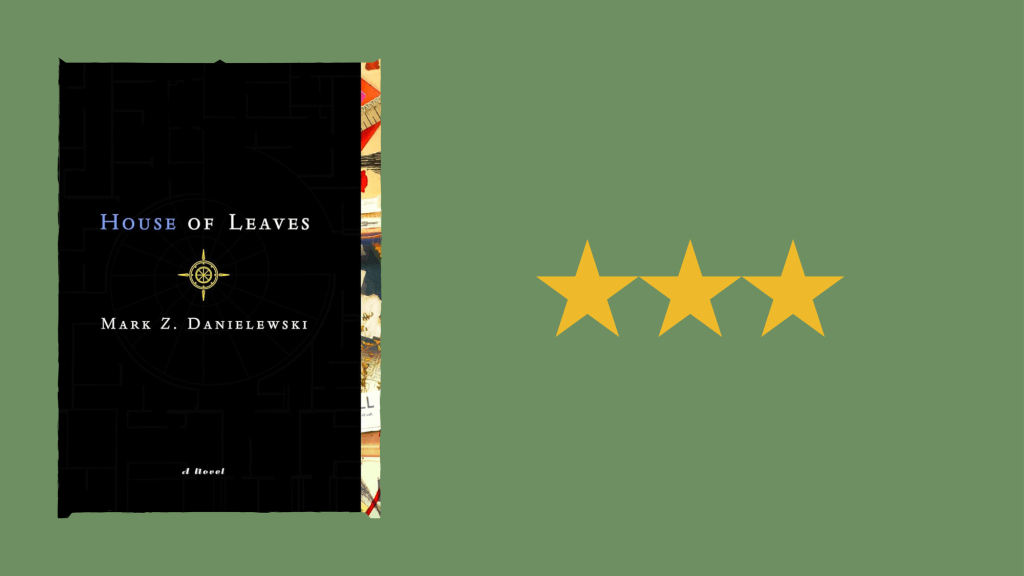
There’s no denying that “House of Leaves” is a singular experience. From the first pages, the novel throws you into a disorienting rabbit hole: a book about a man compiling notes about a documentary that may or may not exist, centering on a house that seems to exist beyond the laws of nature. It’s a fascinating yet maddening premise, and it’s no surprise this book has been said to drive people crazy. And it WORKS, especially at the start. The mystery of the Navidson Record immediately draws you in, and the book’s layered format — stories within stories, footnotes within footnotes, referencing sources that don’t exist — builds an unsettling tension that makes the house’s growing horrors all the more effective.
This was a very difficult read, to say the very least. Its formatting is intentionally chaotic — if anyone has read it in digital format, will you let me know how that translates? — pages printed upside down, sideways, in spirals, or with only a few words at a time. While this contributes to the realism, making it feel like a genuine compilation of fragmented, unstable source material, it also interrupts the flow and can be downright exhausting. I still don’t know why the word “house” was always printed in blue, and I’m not sure that mystery adds much after awhile.
The Navidson house storyline is GENUINELY creepy, and seems exactly like a found-footage horror film that would end up becoming one of my favorites; with its subtle, skin-crawling moments: a closet that suddenly appears, impossible measurements that don’t add up, and a growing sense of dread that pulls the reader under alongside the characters. That was the strongest part for me. On the other hand, Johnny Truant’s footnotes, the ones filled with drug-fueled spirals, unhinged paranoia, and sexually explicit obsessions, felt more like a chaotic sideshow. While they do serve a purpose (adding to the realism and showing his mental unraveling), they didn’t grip me the same way. The monsters in Truant’s world felt less defined and more like noise, haunting-adjacent static.
Ultimately, I respect what this book set out to do. It’s ambitious, experimental, and deeply unsettling in all the right places. But it’s also dense, confusing at times, and too fragmented to fully land emotionally. I’m glad I read it, but I wouldn’t rush to revisit the house anytime soon.
Agatha Christie had always been a daunting prospect for me, just because a lot of the “classics” I come across never really become my favorite. As much as I can appreciate the effort and influence many of the classics provide — books like “Don Quixote” and “Ulysses”, or even the works of Charlotte and Emily Brontë — I’ve found that many of them don’t resonate with me the way they might have with readers of their time. That said, “Murder on the Orient Express” was pleasantly surprising. While some of the language, structure, and cultural context of “dated” novels are present in this one, Christie constructed a narrative that is altogether timeless, suspenseful, and full of personality.
While my experience with Christie is still fairly limited (this is only my second read), I really admire the way she structures her mysteries. Each chapter is cleanly divided into interrogations and new evidence, making the pacing both methodical and engaging. I loved the way the clues slowly stacked up, enough for me to start theorizing alongside Poirot, even if not everything was entirely within reach.
However, there were definitely some moments that left me in the dark. Some of Poirot’s deductions, like linking every passenger to the Armstrong family, felt like a stretch with the information that had been presented to me. Small clues (a grease spot on a passport!!!) were clever, but didn’t always land for me as solid evidence towards his assumptions. Maybe that’s part of the Christie/Poirot experience: the more you read, the more attuned you become to the little inconsistencies and hidden meanings. (I have the same issue when reading/watching Sherlock Holmes. You mean to tell me you noticed a dirt smudge on this woman’s heel and suddenly know she’s in town on business, etc. etc.? I’m not smart enough for this!)
I ended up rating this one ~4 stars. For me, five star reads are books I’d happily revisit again and again, and while I enjoyed the experience, “Murder on the Orient Express” feels like a “one and done.” The twist is satisfying, the characters are fleshed-out and memorable, and Poirot… Well I just find him delightful, I have to admit! I’ll definitely be reading more of his cases soon.
Donna Tartt’s The Secret History is one of those stories that sticks with you long after you’re done reading. In some cases, the novel is found unsettling yet enticingly captivating; others are spent wondering what exactly happened within the 600+ pages they’d just read. I’m a mixture of the two. The best comparison I can make is The Secret History is like a friendly gathering of people who know each other — one that I was lucky enough to be invited to — but when I arrive, I end up being chased out without my antipasto salad. (Please tell me someone gets the TikTok reference, I can’t be the only one chronically online.)
I gave it 4.5 stars (4 rounded down) because, while I found it hard to stop reading, there were a handful of instances where the ambiguity felt less intentional, and left me more confused.
At its core, the story follows Richard as he journeys from sunny California to the much harsher climate of Vermont, joining a tight-knit group of students studying Greek. (After reading Amanda Montell’s Cultish, I try very hard not to immediately attach “cult” as an identifier, but I fear the Greek scholars might fall into that category.) It gave me The Perks of Being a Wallflower vibes, but with a darker narrative and a classicist obsession with beauty and debauchery. In many ways, Richard is a wallflower: mostly hanging back, watching and allowing the events to unfold around him, filtering what the readers know through his sometimes-questionable perspective.
The plot splits evenly between the two books, with the first half highlighting the intense FOMO Richard and Bunny feel as they orbit Henry and the others. By the second half, we are centered onto the aftermath of the murder(s) — I find it interesting how little focus is devoted to the other murders/killings in the story, other than Bunny’s of course — no longer concerned with anything other than guilt, misunderstandings, and moral decay.
What I enjoyed the most from this novel was how deeply readers were drawn into Richard’s disorienting headspace: we are never fully in the know. For the majority of the novel, this works to make readers complicit, forced to solely observe alongside Richard as things shatter around him. But other times, it left me wanting more clarity. As poetic and sophisticated as Henry was, I will never understand the group’s unquestioned loyalty to him. (JUST SAY WHAT YOU MEAN, stop speaking in riddles, you ass. /lh) And I won’t get started on Julian — the relationship between Henry and his professor felt like it ran much deeper than was revealed within the book.
Honestly, I think The Secret History achieved what it meant to. It makes you feel like one of the students outside Henry and Richard’s circle, out of our depth but still seduced by their grandeur all the same.
Joe Hill’s Strange Weather is a collection of short stories that I would categorize as science-fiction rather than post-apocalyptic or dark fantasy, though I can see those elements interspersed with some of the horrors presented. Each story was different than I’d expected, but I ended up enjoying them a lot more than anticipated! If you like weird happenstances and strange weather, these stories are for you.
Again, the ratings are made up (by me) and the points don’t matter (except to me) so take all my reviews with a grain of salt. That being said, spoilers (may be) ahead, so continue at your own risk!
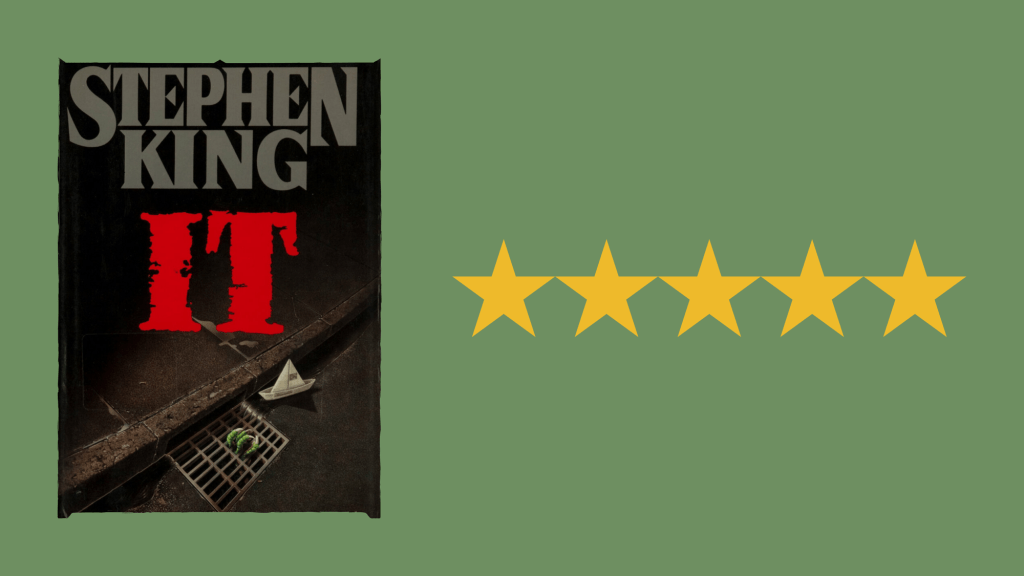
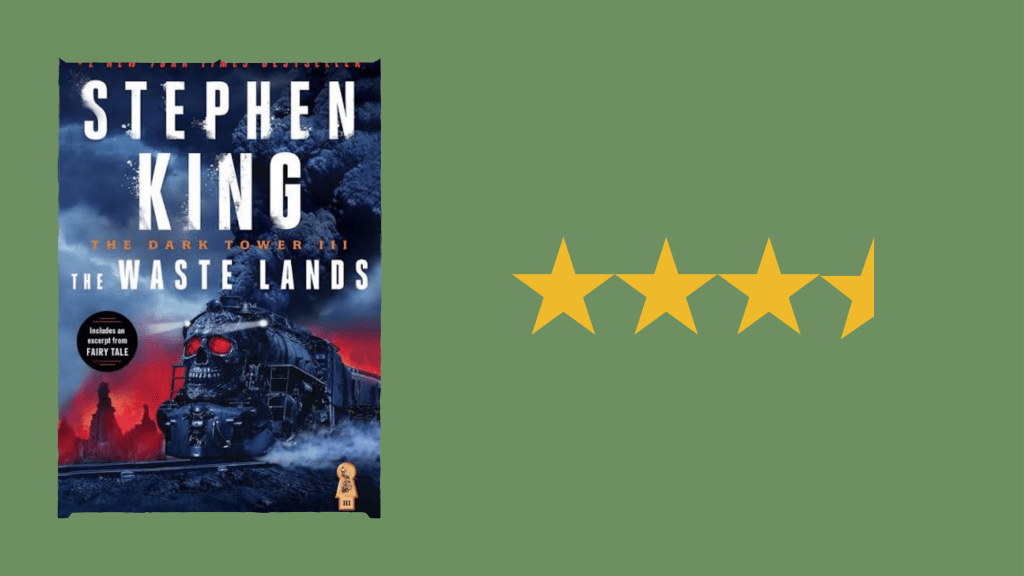
Stephen King’s books are more than just horror stories — they are deeply human, emotionally gripping, and endlessly imaginative. Whether he’s terrifying us with supernatural horrors, exploring the darkest corners of the human mind, or crafting unforgettable characters, King has a way of pulling readers into his worlds like no other author.
What makes his work so timeless is his ability to blend fear with emotion; he makes us care about the people in his stories just as much as the horrors they are facing. His books are not just about monsters or ghosts, they are about survival, fate, regret, guilt, the battle between good and evil, and the power of storytelling itself.
That recognizable ITC Benguiat or Pacella Latina fonts that gave the famed author himself a chilling appearance on his works, always in a bright red or stark white so it can’t be ignored.
Nostalgia is a powerful feeling, and it’s an emotion that can be conjured by the most random sensations. The squeaky sound of chalk can recall memories of your kindergarten classroom, the salty smell of the ocean can bring back the family trip you took to the beach, the fruity taste of an ice-cold popsicle reminding you of running after the ice cream truck on those hot summer afternoons.
When I see a Stephen King novel, all I can think of is my childhood home and the stacks of books my mom kept in her room. The importance of reading has been instilled in me since my earliest memory, and Stephen King played a big part in my literary development over the years. In the last eighteen months, I have made it a personal goal to read every one of King’s works so my mom and I can continue discussing every aspect that gave us nightmares. While I still haven’t made my way through his expansive 65+ collection of novels and over 200+ short stories, I can always update this list if another book of his stands out to me.
It’s my website, I can make the rules.
So, without further ado, here is a list of my top five favorite Stephen King novels (so far).
Cover of King’s 11/22/63
11/22/63 is a historical- and science-fiction novel about a man with the capability to time travel, and he decides to go back in time to try and prevent the assassination of President John F. Kennedy. In this attempt to intercept the start of the Vietnam War, he sees the end of the 1950s and the beginning of the 1960s, described in the most trivial detail like the true cost of food, haircuts, and clothing.
Beyond just his attention to detail, King’s ability to craft a fictional narrative interspersed with factual historical elements is one that will never cease to amaze me. It becomes so easy to empathize with the main character, Jake Epping, as he faces recorded challenges — such as preventing a brutal domestic murder in 1958 — which allows for a deeper exploration of complex historical situations through a fictional narrative.
Readers experience everything right along with the protagonist, Jake: his triumphs and successes, his losses and defeats. I have reread it myself a couple times, and you’ll always discover something new. This book is worth the time and effort, I would consider it a MUST READ!
Cover of King’s The Stand
The Stand is King’s longest published work (at least the uncut edition,) and follows the lives of several survivors in the aftermath of a global, deadly pandemic. The novel contains post-apocalyptic and dark fantasy themes, with the humans immune to the weaponized influenza splitting into groups that are meant to represent the forces of good and evil.
The only reason this novel isn’t first on my list is because of the length — it took me FOREVER to finish it. Not to mention, by the time I got to the end of one chapter that focused on a set of characters (Frannie and Harold, for example,) I will have already forgotten all about Nick and his struggles in a police station.
That being said, every aspect of this novel just checked all the boxes of what I want in a book: character development, romance, contrasting moments of inspiration and devatation, etc. Definitely worth the effort and time it takes to read!
Cover of King’s Mr. Mercedes
Mr. Mercedes is considered to be King’s “first hard-boiled detective book…” according to the author himself, and follows the events of a retired detective as he tries to hunt down a murderer.
While that makes it sound like every other crime novel that’s ever been published, the chapters in which King has written from the perspective of the serial killer add chilling elements of tension where the readers are privy to information that the protagonist is not.
I figured that knowing the murderer would spoil the ending of the book… but Mr. Mercedes remains just ambiguous enough that readers are trying to solve the clues right alongside Bill Hodges and Holly.
This novel kickstarted a trilogy that very quickly became one of my favorite book series — and introduced one of the best fictional characters, Holly Gibney — but I felt it only fair to include the one that started it all. It’s also one that I would suggest to people who may not be interested in horror — I gotta get them into Stephen King somehow!
Cover of King’s Misery
Misery is a psychological horror based on the one-sided relationship between famed author Paul Sheldon and his self-proclaimed biggest fan Annie Wilkes. The significance of this novel extends beyond the fear and adrenaline that the text incites in the reader; King wrote the plot and its characters as symbols of his own struggles with drug addiction and writer’s block, adding a new layer of emotional depth to an already disturbing story.
It’s a much quicker read in comparison to others on this list — 310 pages is a lot less daunting! — though a depreciated word count did not dimish the paralyzing dread Annie Wilkes elicted from me.
Also… I am a firm believer in the idea that “the book is always better,” but Kathy Bates’ performance in the movie adaptation of Misery was nothing short of a masterpiece.
Cover of King’s The Shining
The Shining is a horror novel that was published as King’s third work, and established the foundation for his career as “The King of Horror.” It centers around Jack Torrance, his wife Wendy, and their son Danny, as they experience frightening and otherworldly instances during their stay at The Overlook hotel.
Much like Misery, The Shining contains the psychological and gothic horror themes that King has become recognizable for, and paved the way for an equally amazing sequel: Doctor Sleep. I could make a whole separate post with my thoughts and opinions about The Shining universe, but I think I might hold off until I finish all of his works (I want to be able to catch all the references and Easter eggs he leaves in all his books!)
Trust me, you’ll get spooked when you find out the meaning of REDRUM.
This list represents just a handful of my favorites (how on EARTH am I expected to narrow it down to just five?!) but King’s vast collection of publications has something for everone: psychological thrillers, supernatural nightmares, gripping dramas, you name it. No matter how many times I revisit these books — swearing that I practically have some of them memorized at this point — they still send chills down my spine and keep me turning pages until late in the night.
If you’re new to King or just looking for your next great read, any of these books would be a perfect place to start. And if you’re already a fan, you need to tell me your favorite book of his because I’m sure I will have a lot to say about it!